Vienna, Austria, 17 November 2026 – The United Nations Industrial Development Organization (UNIDO) concluded its Circular Economy & Green Industry Week 2026, held from 2 to 4 November at the Vienna International Centre (Austria) under the theme “Shaping the Future of Industry: Circular, Cleaner, Competitive.” The event brought together ministers, senior government officials, Permanent Representatives, industry leaders, financial institutions, scientists, development partners and innovators from around the world.
The Week marked an important step towards implementing Resolution GC.21/Res.4 on Circular Economy for Inclusive and Sustainable Industrial Development, adopted by UNIDO Member States at the Organization’s twenty first General Conference in Riyadh 2025. Sponsored by Armenia, Mexico and the Philippines, and supported by other Member States, the resolution reinforces UNIDO’s mandate to advance circular economy approaches in industrial development. Discussions will also inform the development of the forthcoming Circular Economy Technical Framework and Plan of Action envisaged under the resolution to guide its implementation and help translate commitments into industrial action.
Over three days, participants examined how circularity can strengthen resource security, industrial competitiveness and supply- chain resilience while reducing pollution, greenhouse gas emissions and and pressure on biodiversity. A central message emerged: implementation requires national ownership, enabling policies, technology, skills, investment and international partnerships.
Day 1 | Political leadership, inclusion and finance
The high-level opening on 2 November was led by UNIDO Director General Gerd Müller. Participants included Norbert Totschnig, Federal Minister for Agriculture and Forestry, Climate and Environmental Protection, Regions and Water Management, Austria; Andrew Baasaron, Minister of Economic Affairs, Entrepreneurship and Technological Innovation, Suriname; Tigran Gasparyan, Deputy Minister of Environment, Armenia; Hiro V. Masuda, Assistant Secretary, Department of Environment and Natural Resources, Philippines; José Antonio Zabalgoitia Trejo, Permanent Representative of Mexico to UNIDO; Matilda Aku Alomatu Osei-Agyeman, Permanent Representative of Ghana to UNIDO; Christian Ebner, Permanent Representative of Austria to UNIDO; and Carl Hallergård, Permanent Representative of the European Union to UNIDO.
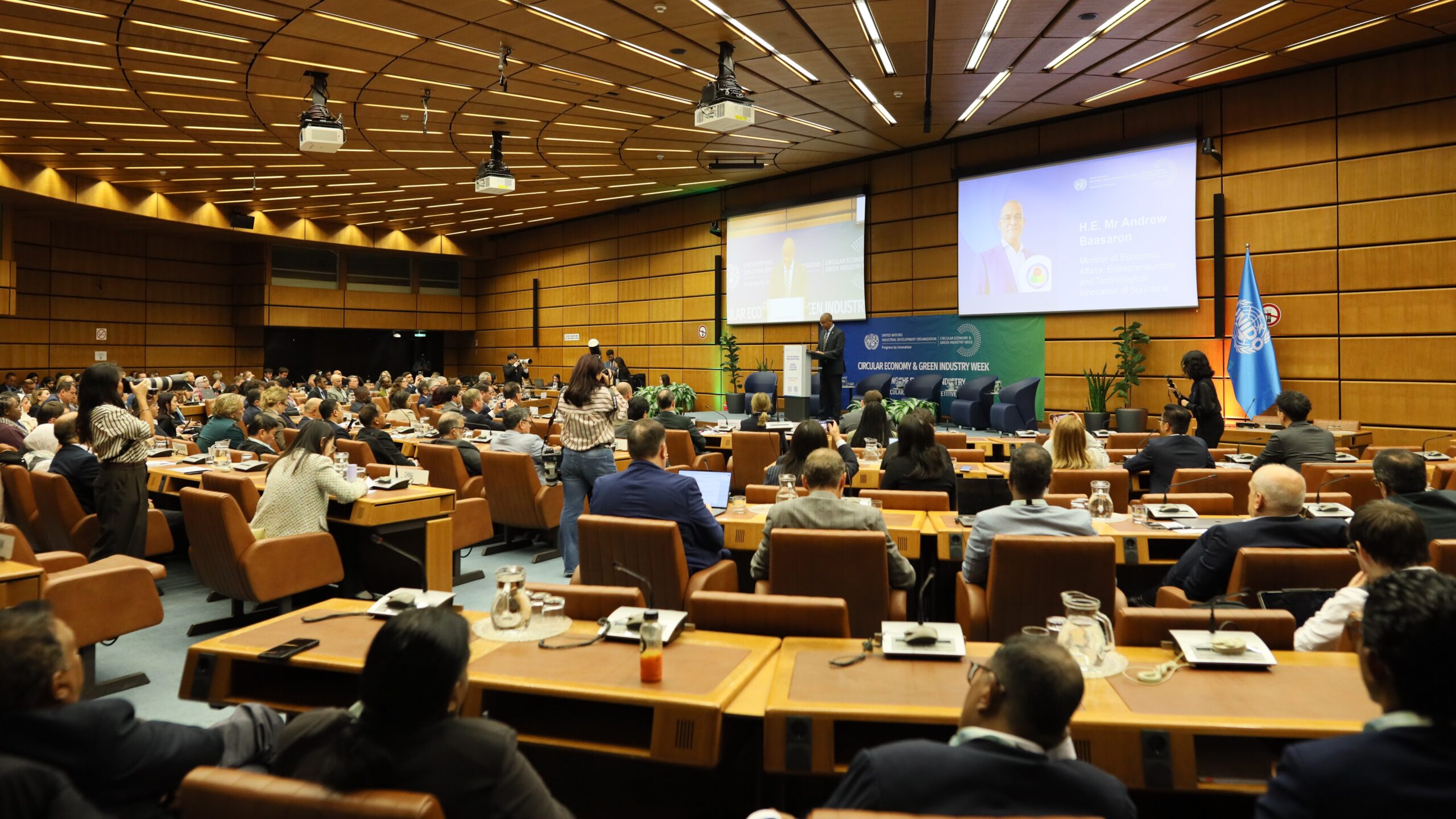
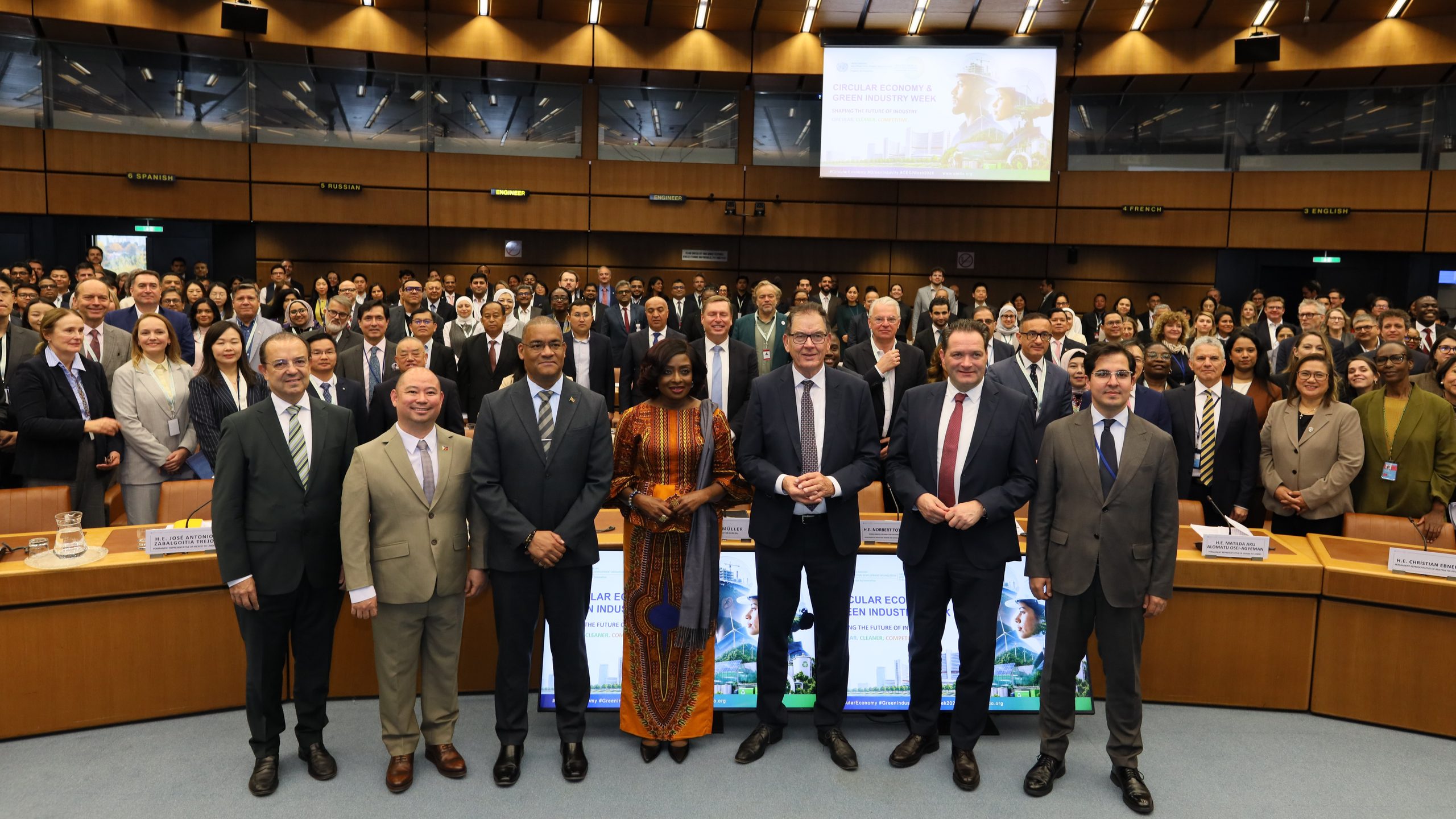
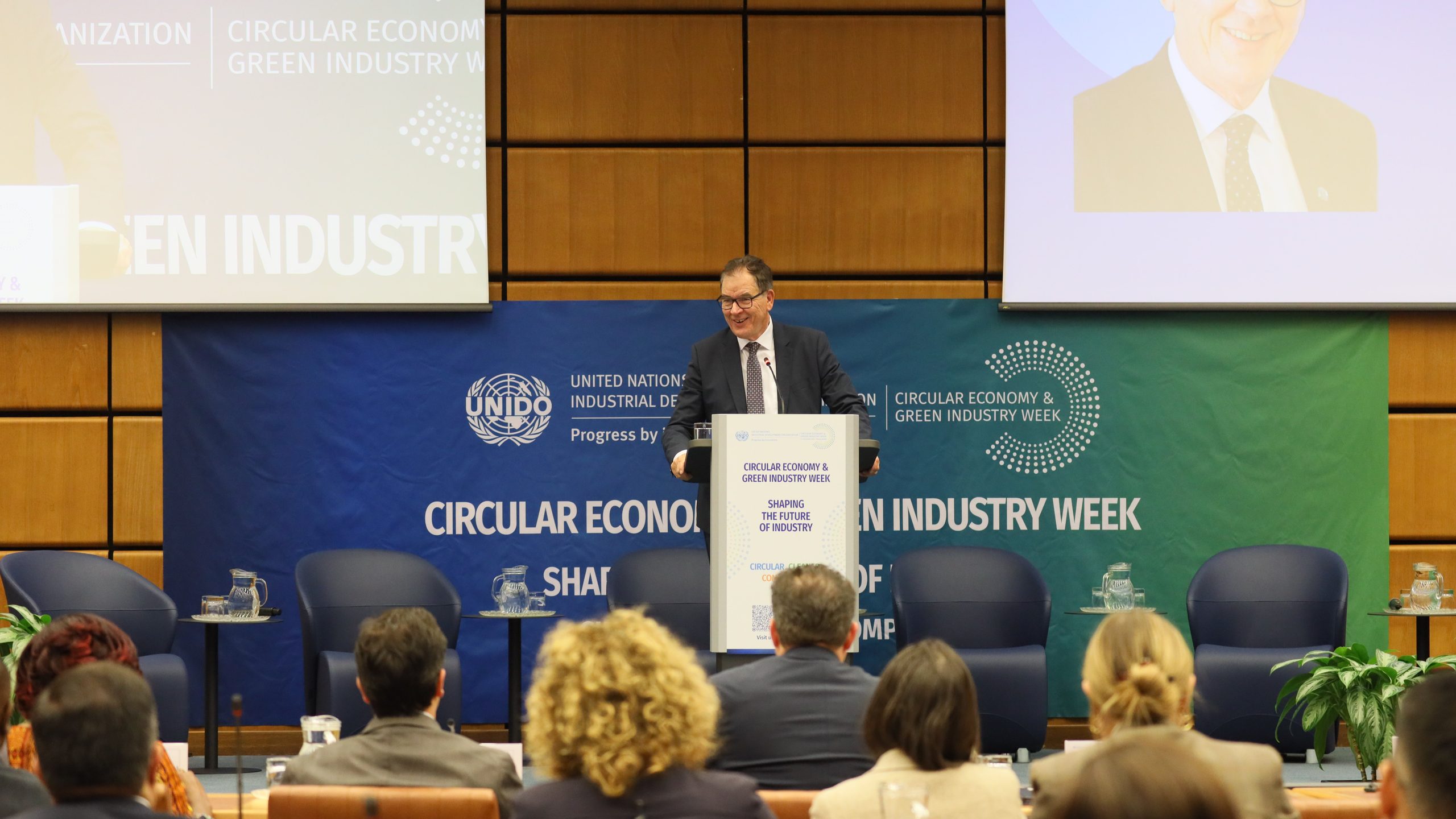
Photo 1 from left: Tigran Gasparyan; DG Gerd Müller; Matilda Aku Alomatu Osei-Agyeman; Norbert Totschnig; Andrew Baasaron; Hiro V. Masuda; José Antonio Zabalgoitia Trejo.
Director General Müller underscored the economic and environmental ambition behind the transition: “Circularity is not about producing less. It is about producing better. Producing smarter. Producing more value with fewer resources. Circular economy is not an alternative to industrialization. It is part of the next generation of industry.” The exchanges linked the mandate established by Member States to national priorities and consultations on the forthcoming Technical Framework and Plan of Action.
Participants emphasized that implementation pathways must reflect countries’ different industrial structures, resources and institutional capacities, rather than follow a single model.
The opening day also examined women’s leadership in the circular economy, highlighting their contributions as entrepreneurs, innovators and decision-makers, alongside persistent barriers to finance, markets, skills and leadership opportunities. A dedicated financing session brought together representatives of public and private financial institutions to explore blended finance, risk-sharing, investment-ready industrial projects and policy incentives to move circular solutions beyond pilot projects and towards industrial-scale deployment.
Contributions from the Global Environment Facility, the European Union and bilateral development partners reinforced the importance of coordinated international support.
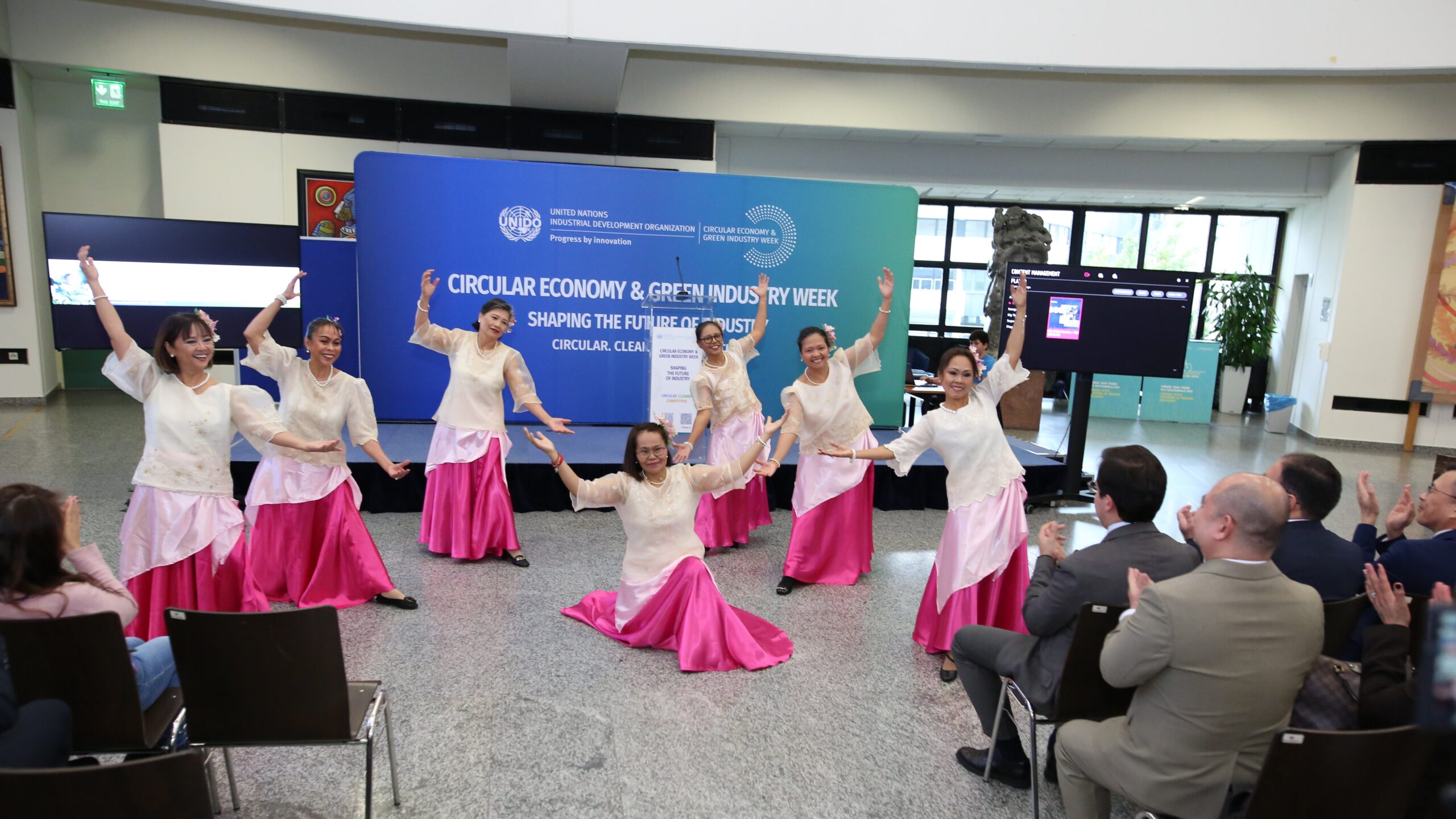
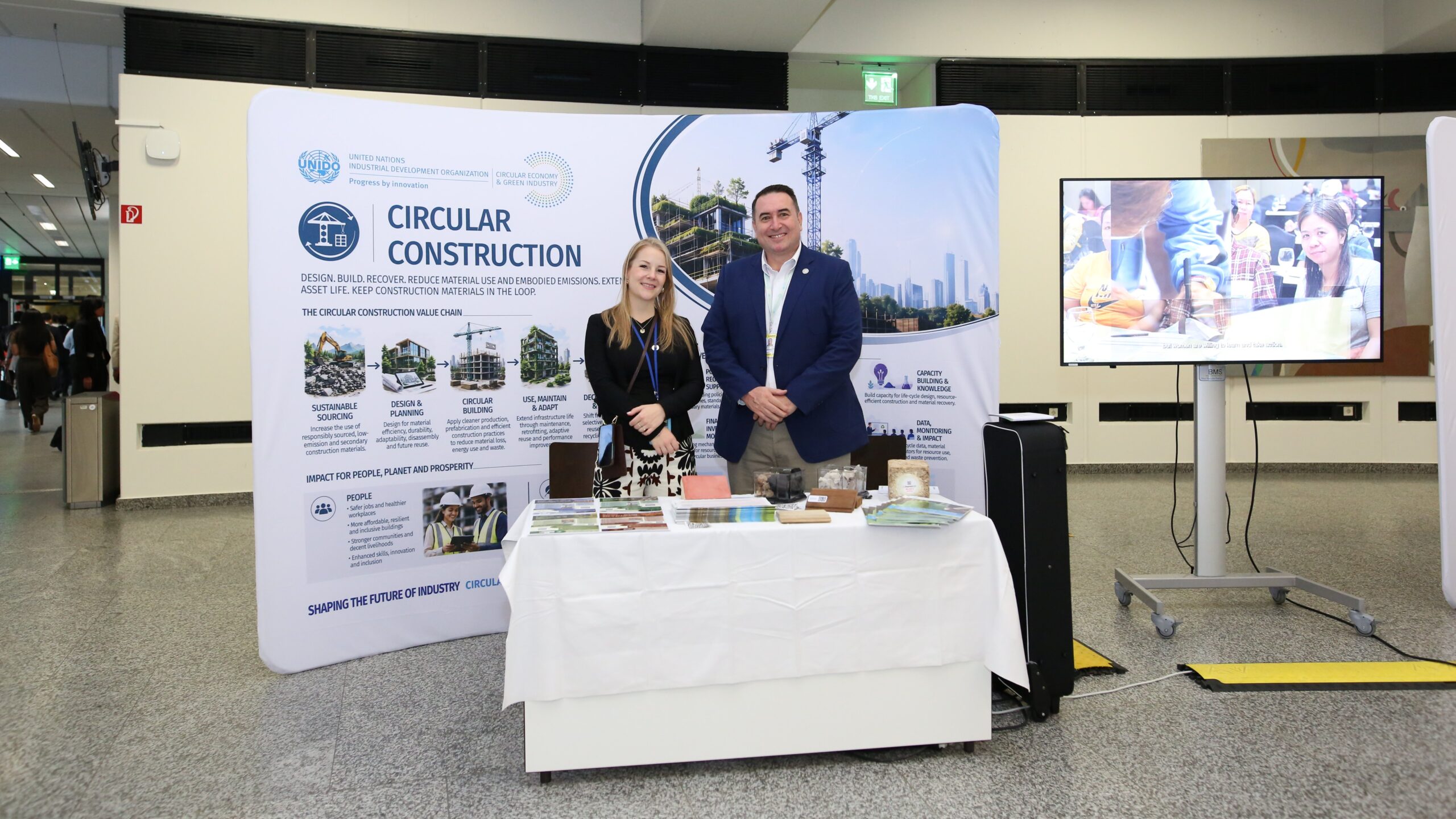
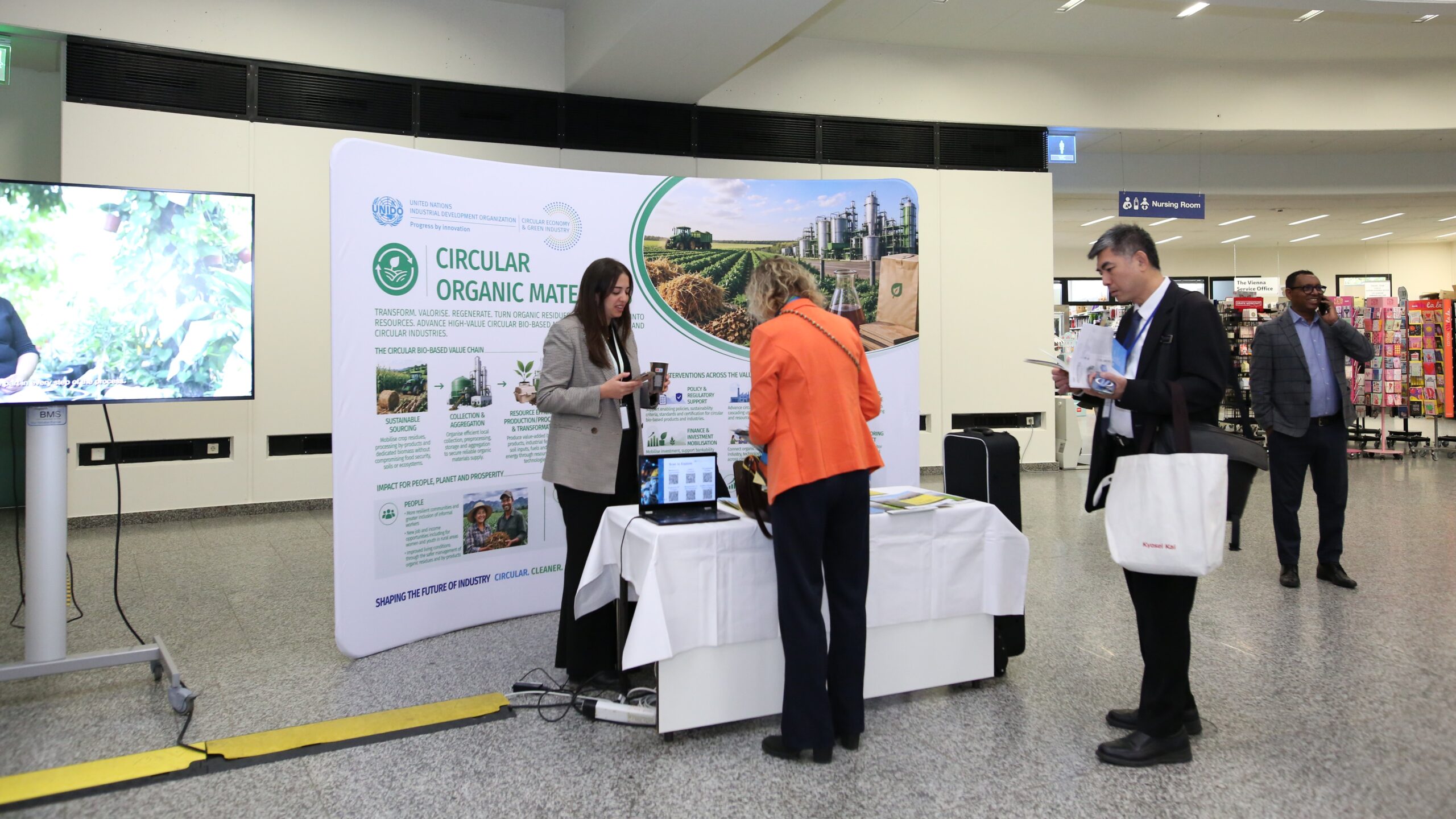
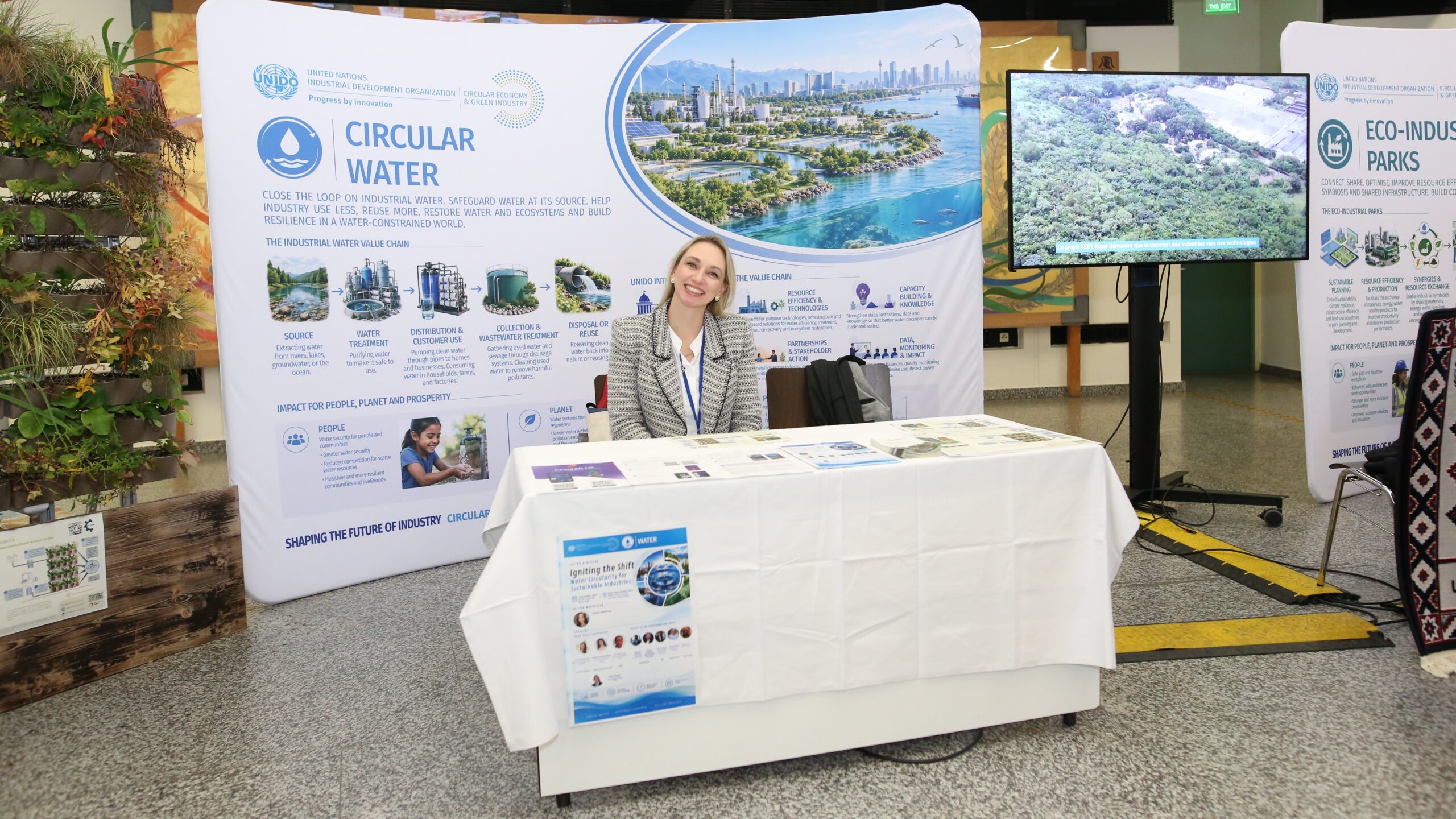
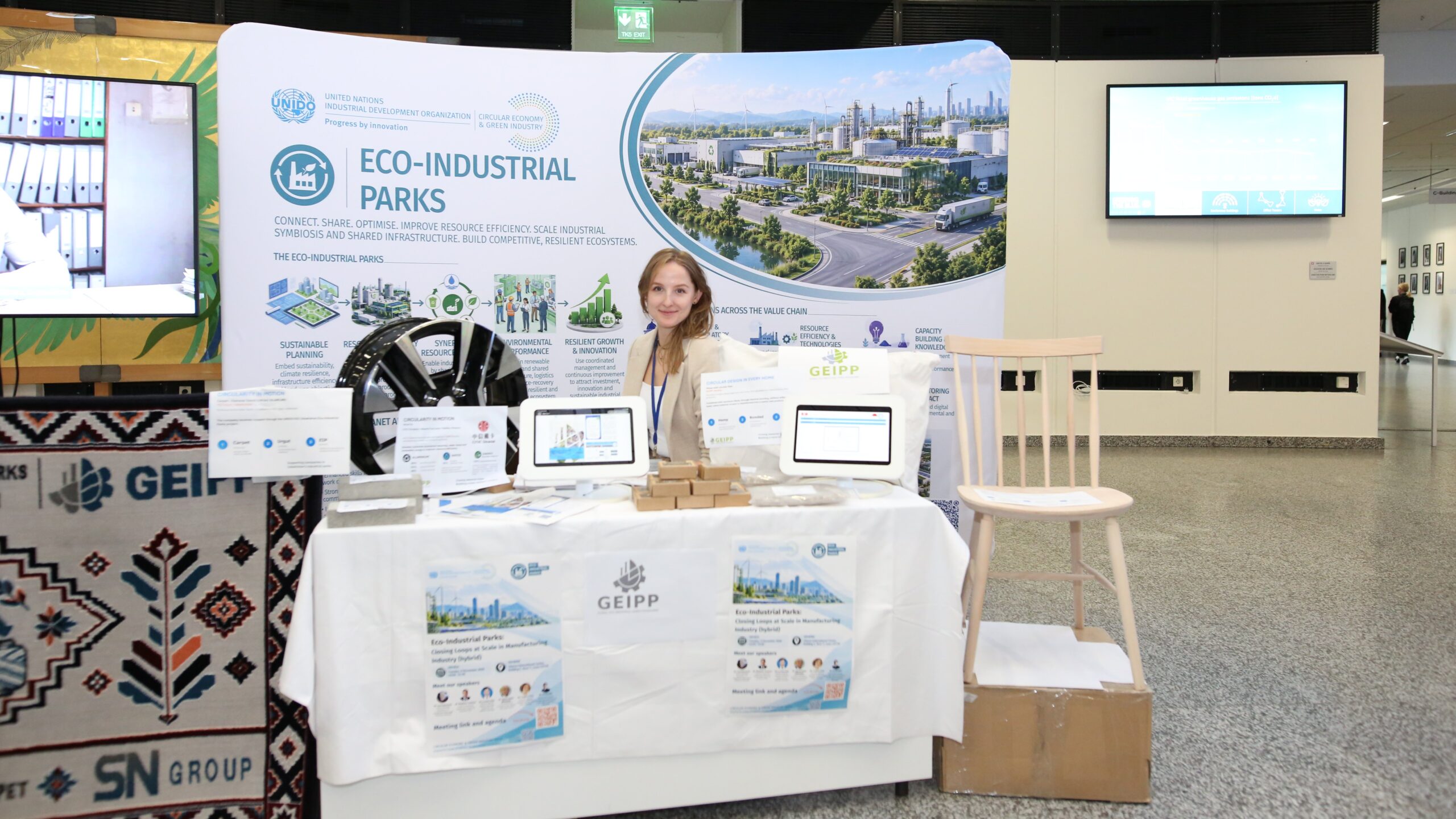
The day concluded with the opening of an exhibition in the Rotunda, accompanied by cultural performances from Armenia and the Philippines. The exhibition presented eight thematic areas, showcasing practical circular economy solutions and initiatives from across UNIDO’s industrial development portfolio.
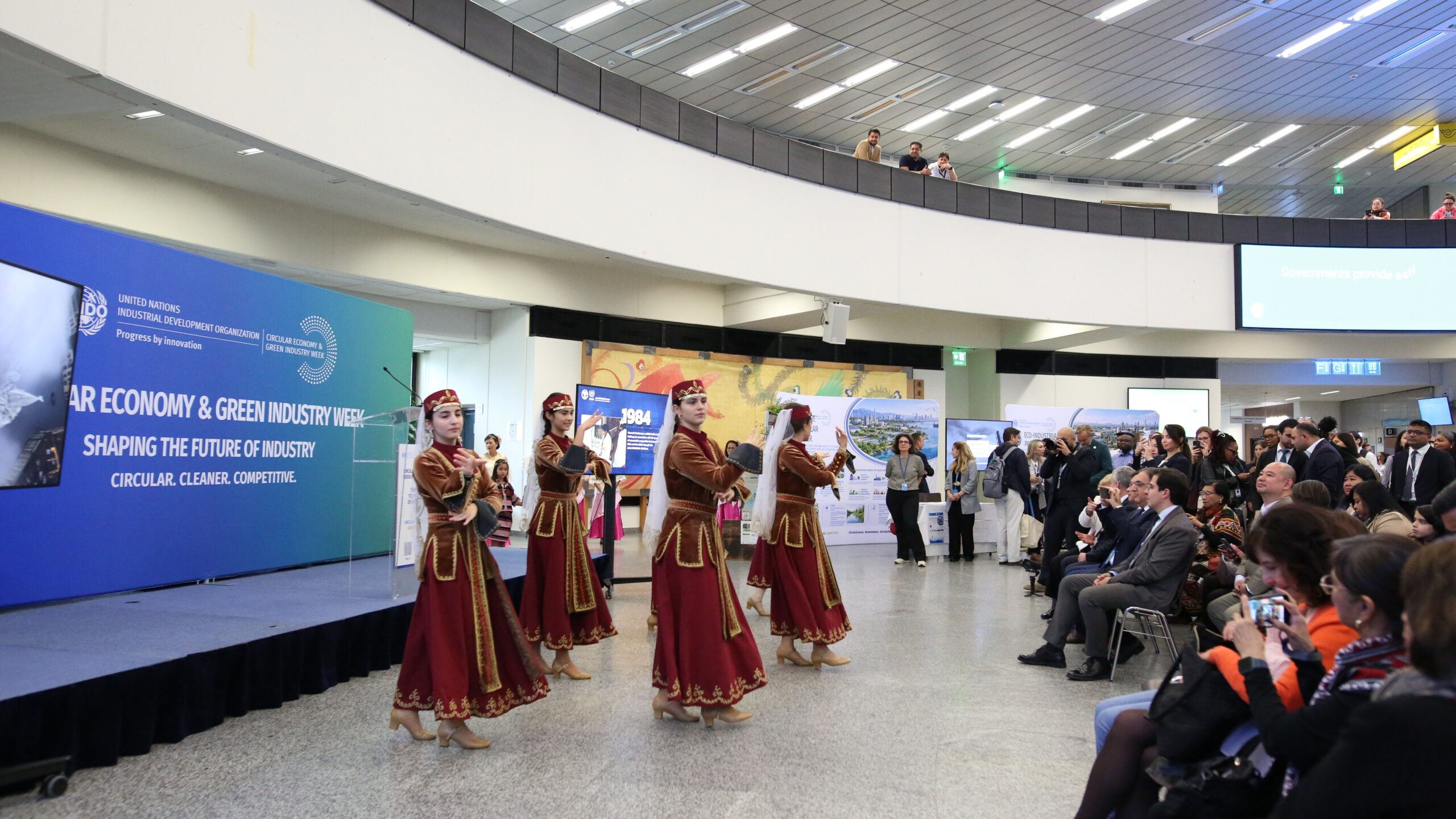
Day 2 | Industrial innovation and eight implementation pathways
On 3 November, attention turned to industrial implementation. Corporate leaders explored how the private sector can scale circular business models, strengthen partnerships, advance sustainable supply chains and circular product design, and develop markets for secondary materials.
A green chemistry session, held under the Global Green Chemistry Innovation and Network Programme, a joint initiative of UNIDO and the Center for Green Chemistry and Green Engineering at Yale University, supported by the Global Environment Facility – explored safer chemicals, pollution prevention and responsible materials management. A subsequent technology foresight session examined how emerging technologies and anticipatory planning can help countries identify industrial opportunities, manage risks and prepare for future industrial transformation.
The programme continued with eight technical deep dives, led by specialists from UNIDO’s Division of Circular Economy and Green Industry and international experts. They examined opportunities to accelerate circular transformation across key industrial sectors and value chains: textiles, plastics, electronics, construction, critical minerals, organic materials, water and eco-industrial parks.
Drawing on UNIDO’s expertise in resource-efficient and cleaner production, responsible materials management and circular industrial development, the discussions addressed policy, regulatory, technological, financial and capacity-related barriers to scaling solutions. From textile-to-textile recycling and electronics recovery to circular construction, biomass valorization, industrial water reuse and industrial symbiosis, exchanges emphasized locally adapted approaches, viable markets for secondary materials, skills development, investment and partnerships to strengthen industrial competitiveness and deliver lasting environmental and economic benefits.
The Rotunda also hosted “Circularity in Style”, a sustainable fashion show organized in collaboration with a multi-brand initiative, including the H&M Foundation, to showcase innovative circular fashion solutions and sustainable practices across the textile value chain.
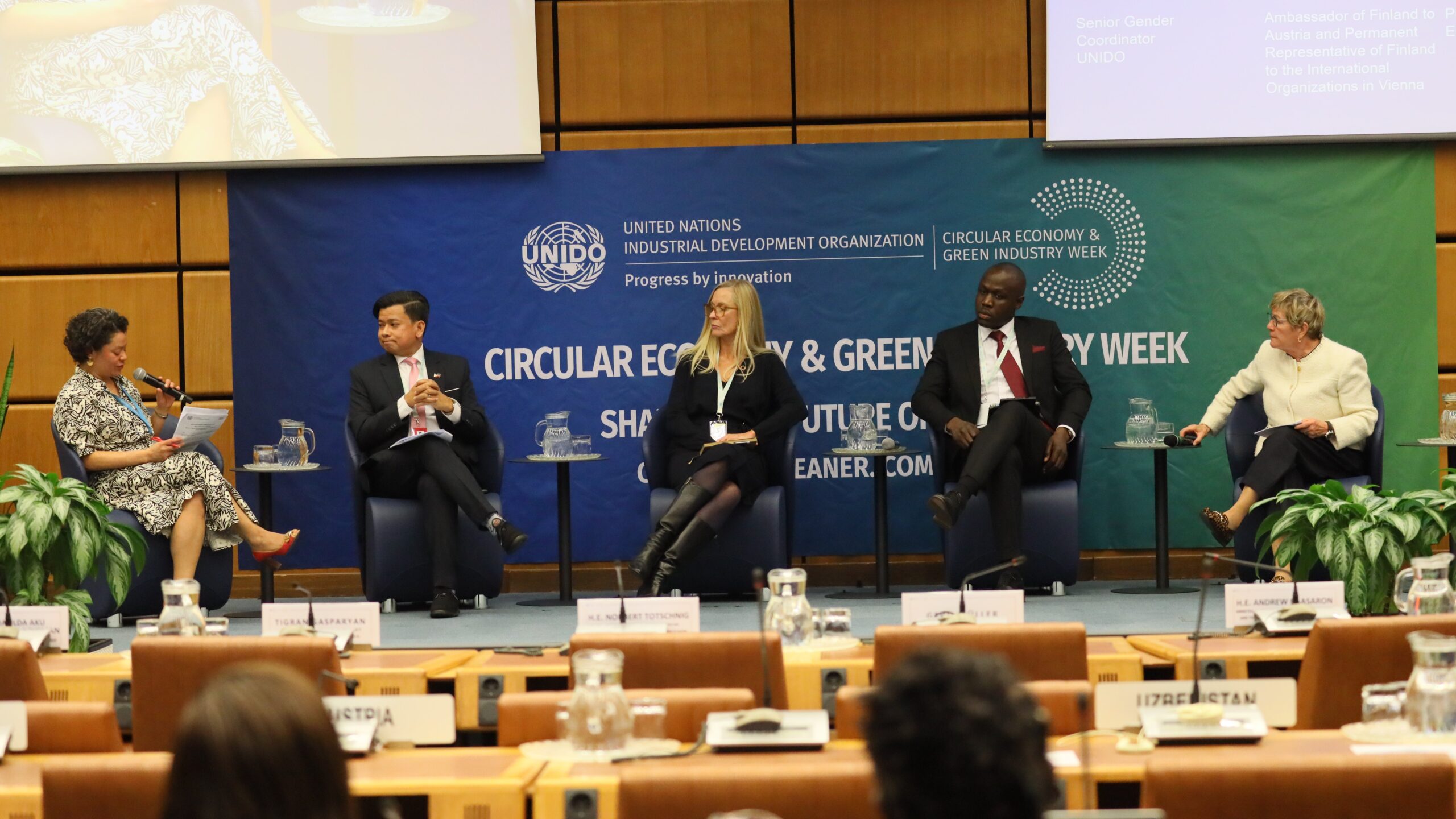
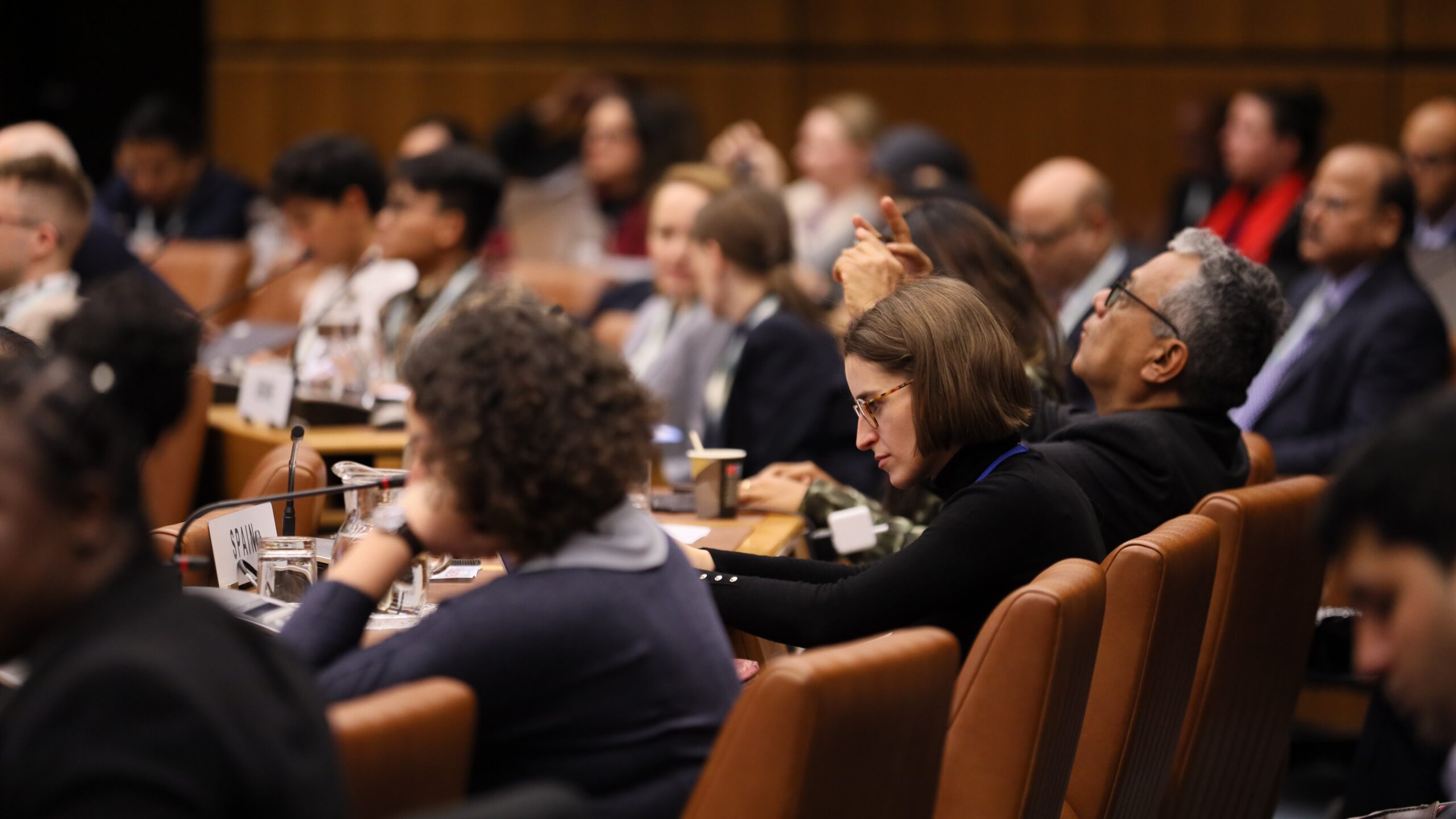
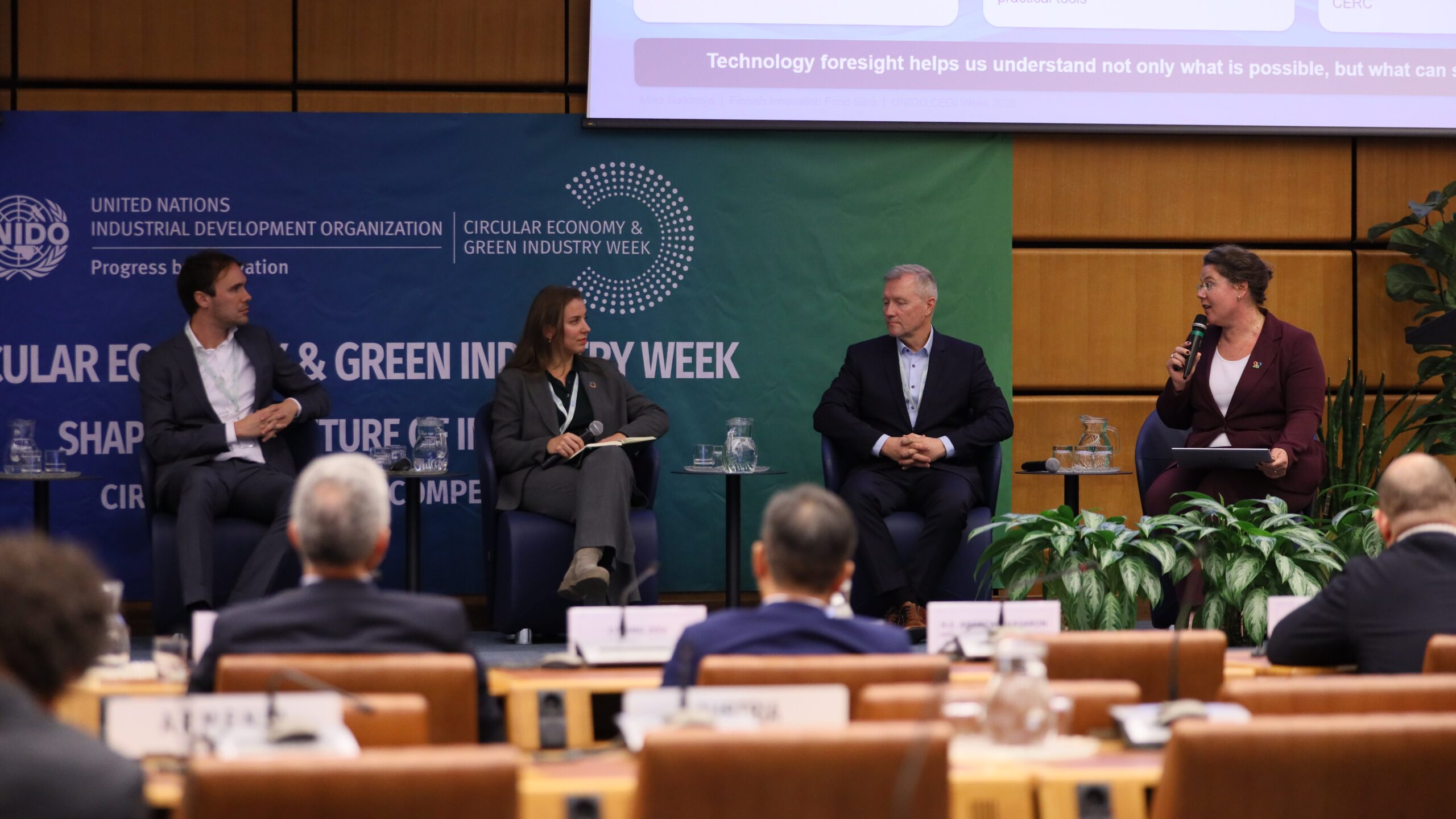
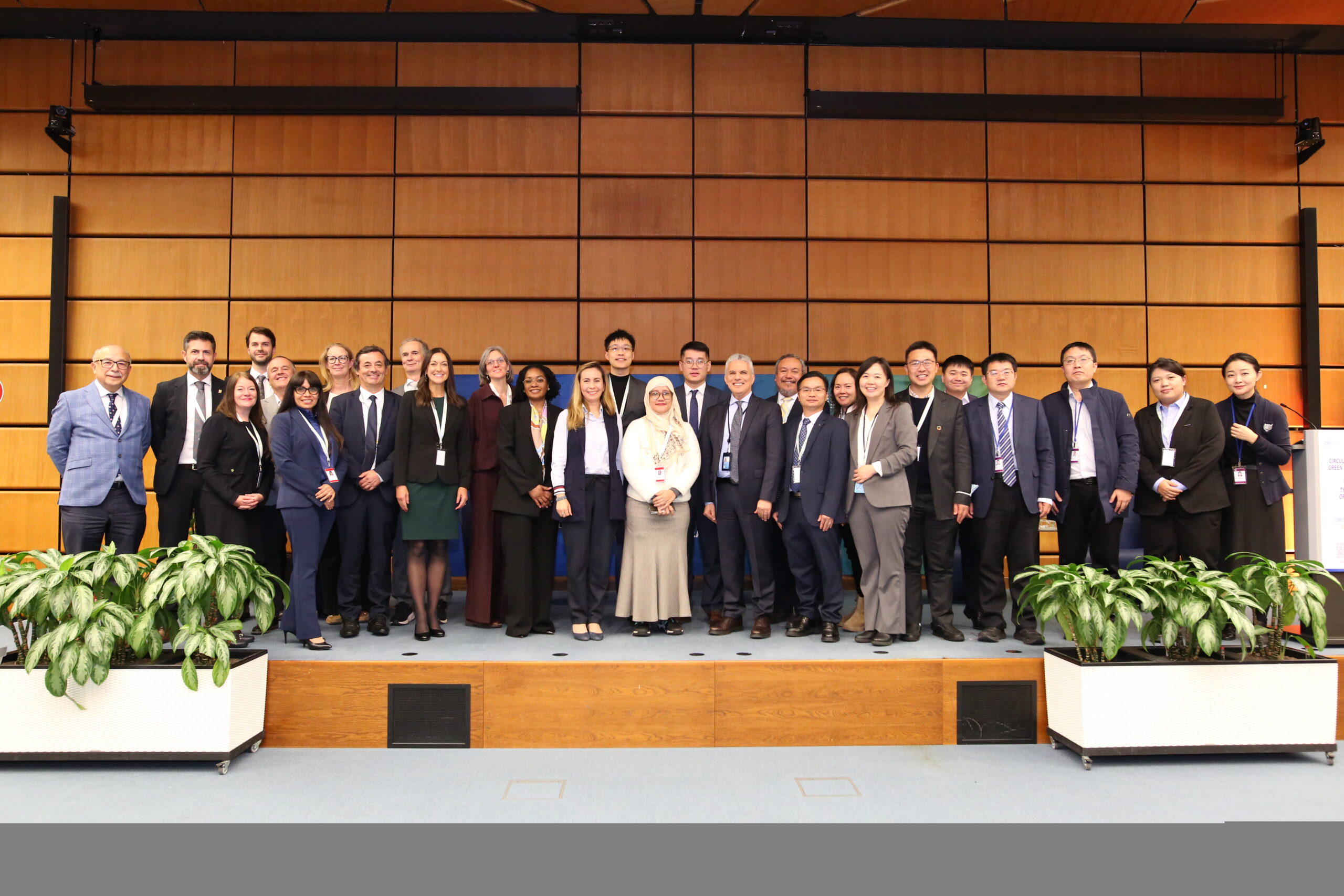
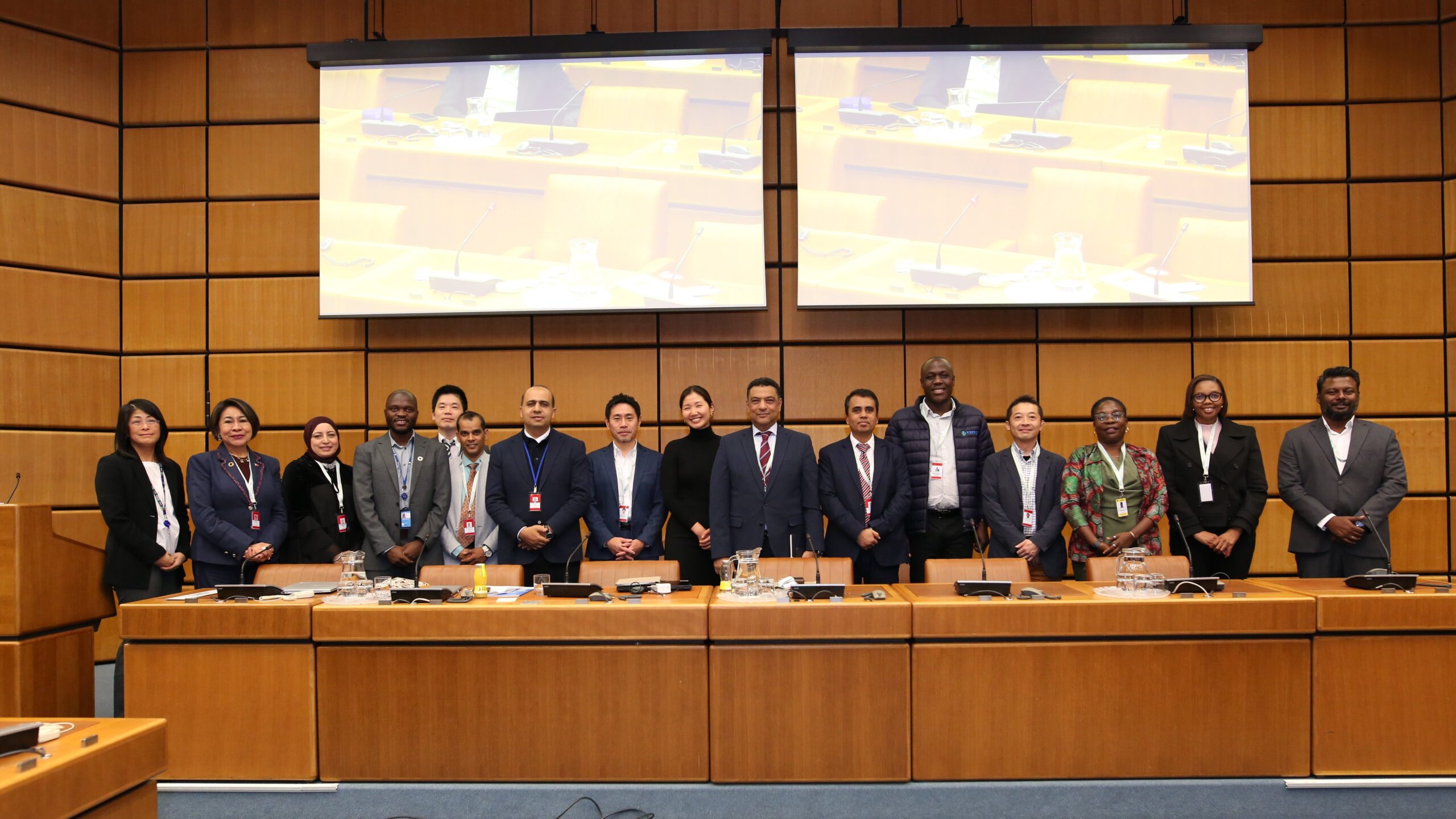
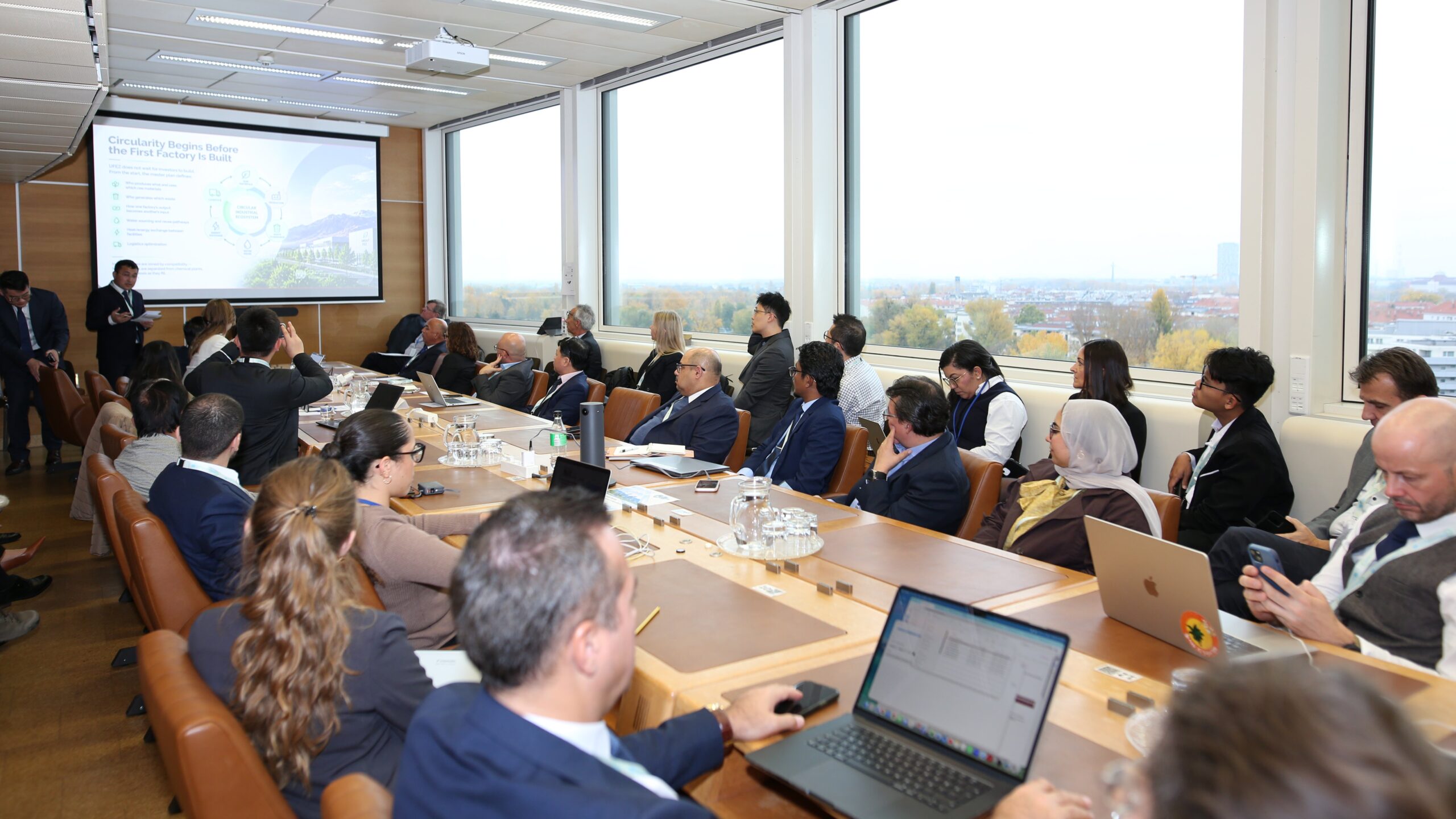
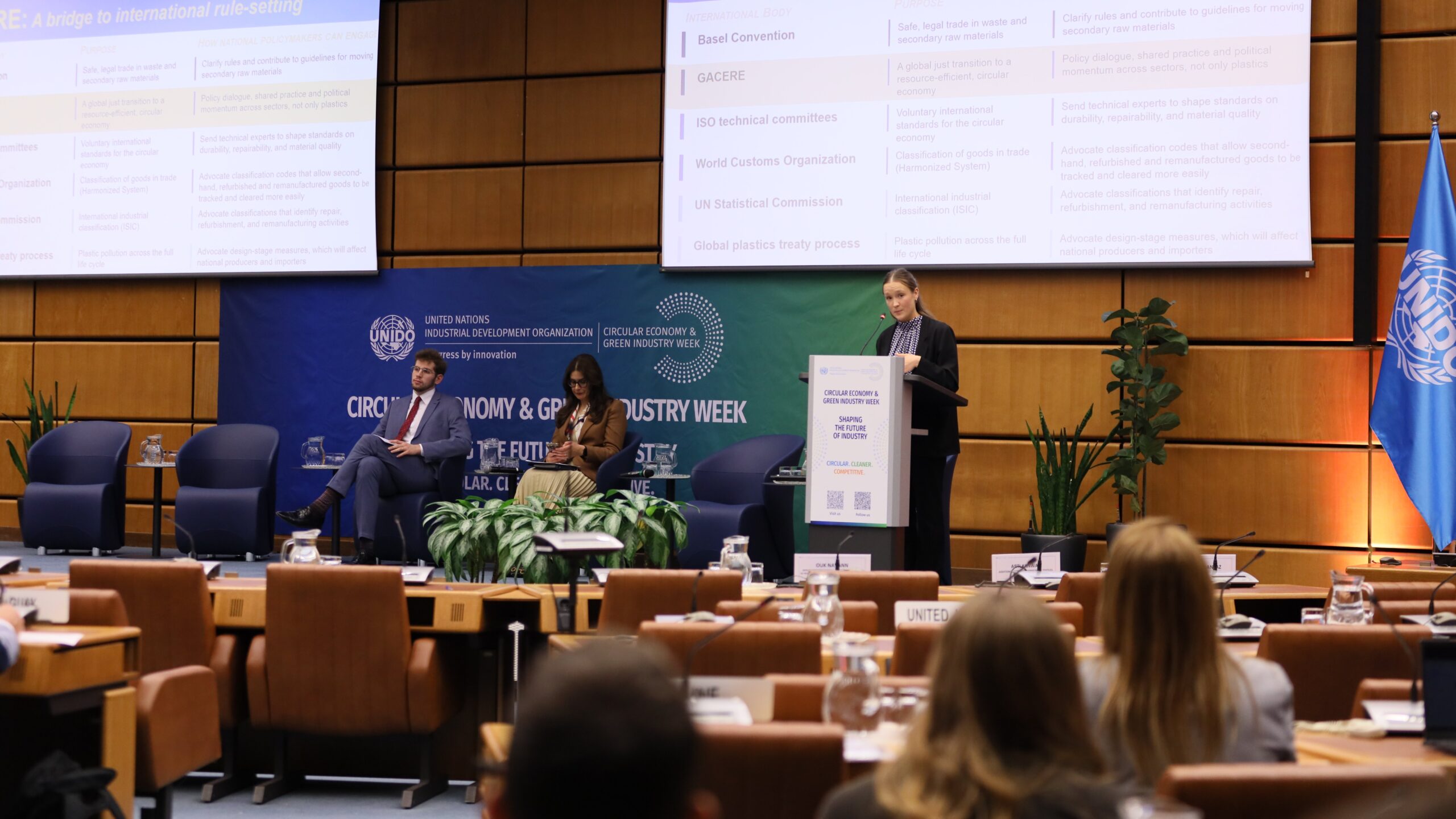
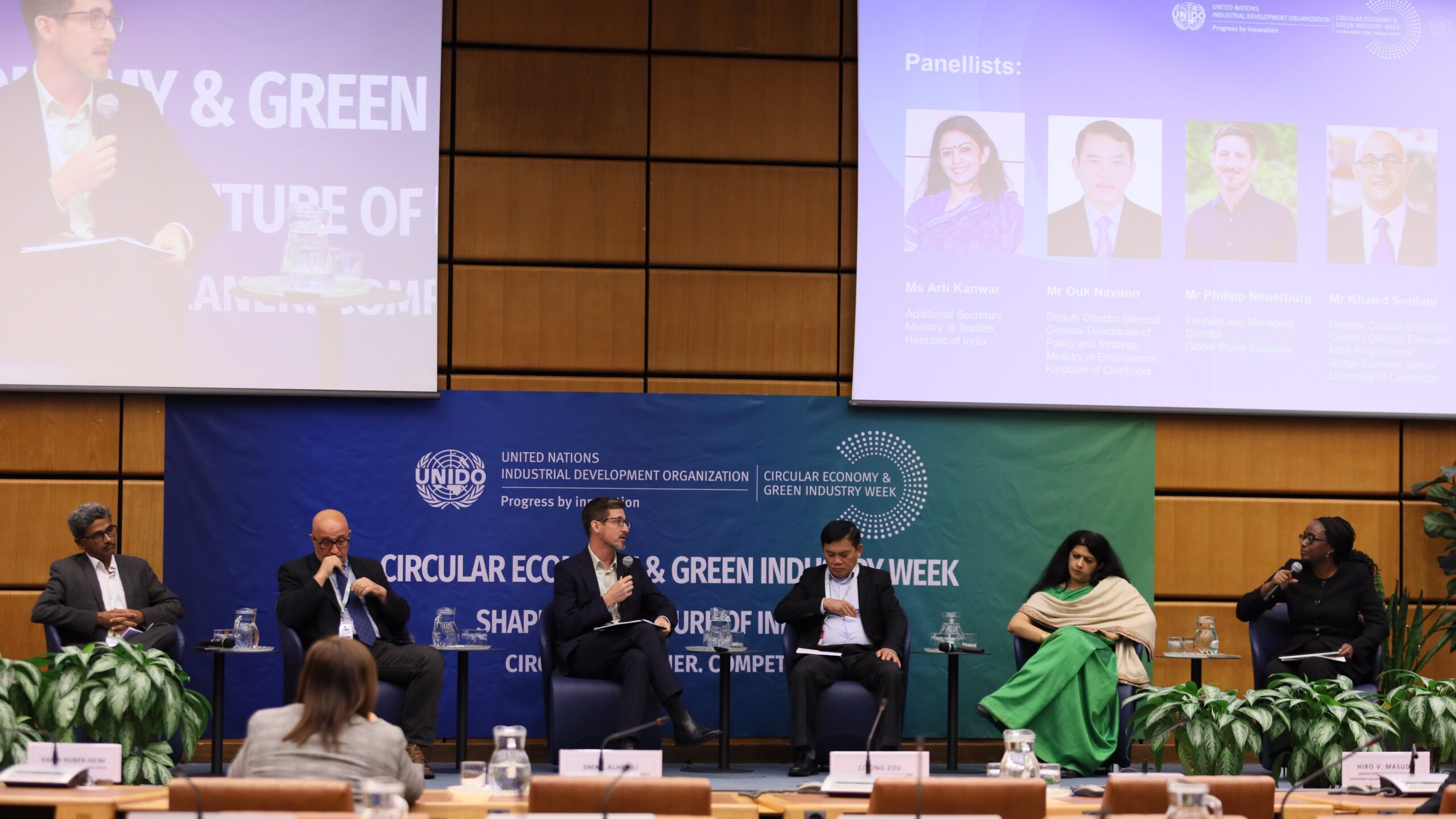
Sessions: Women in Circular Economy; Financing Circular Economy; Private sector; Green Chemistry, Foresight; Deep Dive, GACERE; UN PAGE; RECPnet; and Circular Fashion Show.
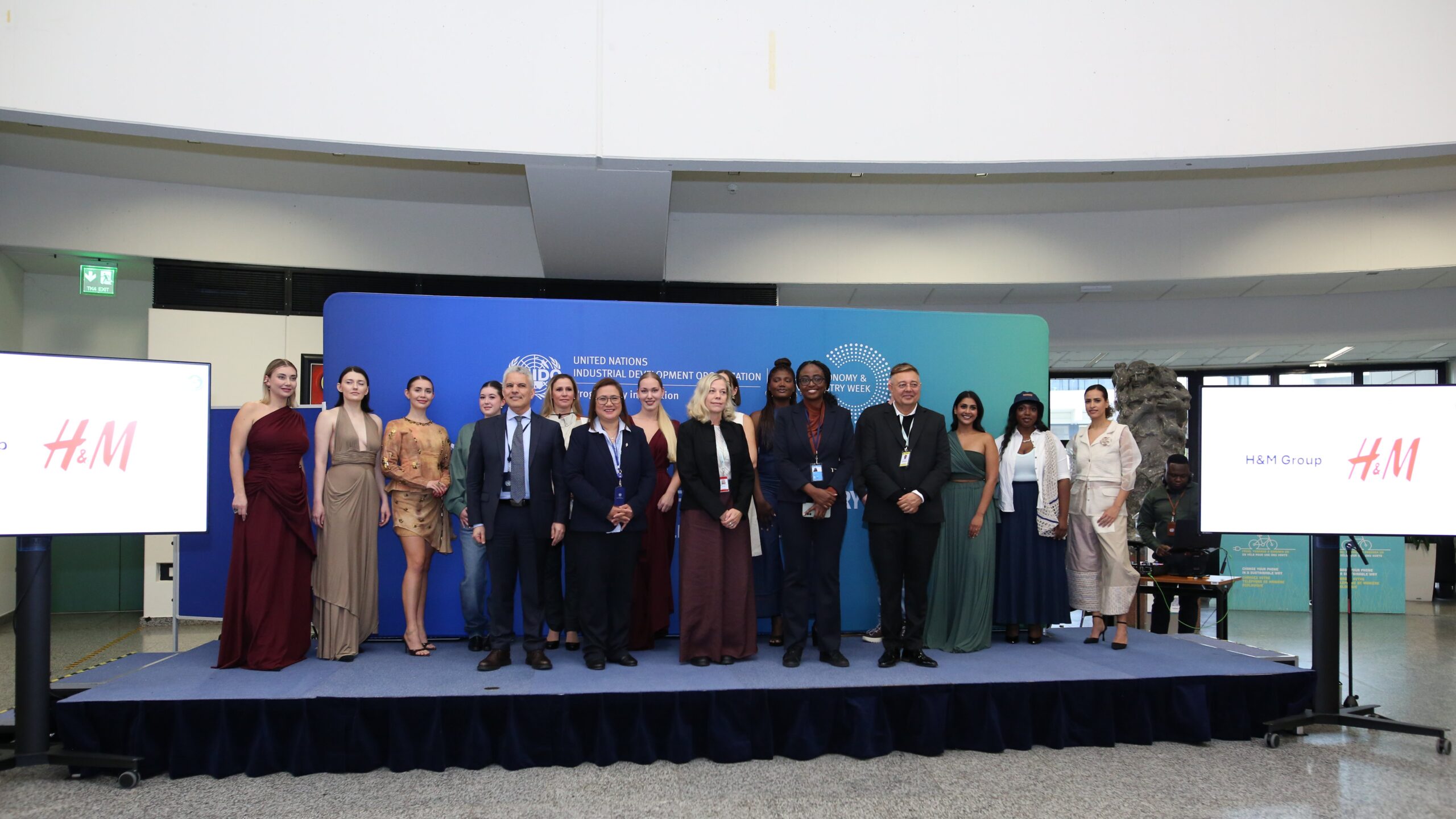
Day 3 | Partnerships and coordinated multilateral delivery
On 4 November, the session “Making Circularity Happen – How Governance, Business and Culture Drive the Austrian Transition,” led by Circular Economy Forum Austria (CEFA) and ICEP – Association for Global Development, examined Austria’s experience. Government, business and civil society representatives discussed how policy, investment, entrepreneurship and public engagement can accelerate circular markets and deepen cooperation between UNIDO and its host country.
Sessions involving the Global Alliance on Circular Economy and Resource Efficiency (GACERE), the Partnership for Action on Green Economy (PAGE) and the Global Network for Resource Efficient and Cleaner Production (RECPnet) explored how international initiatives can complement one another. Discussions highlighted the need to connect policy dialogue with practical country-level assistance, strengthen coordination among UNIDO, UNEP, UNDP and other partners, and avoid fragmented efforts.
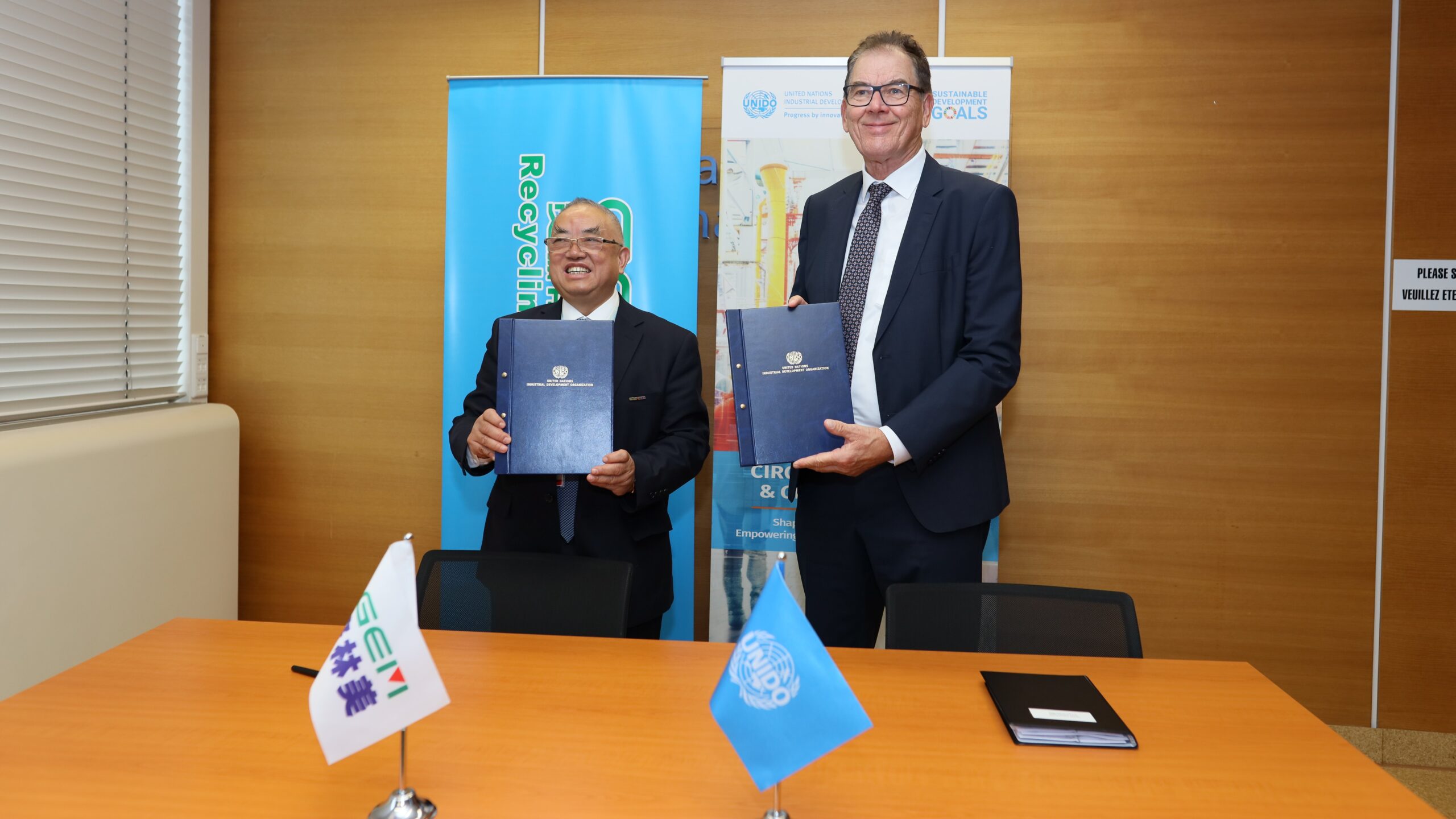
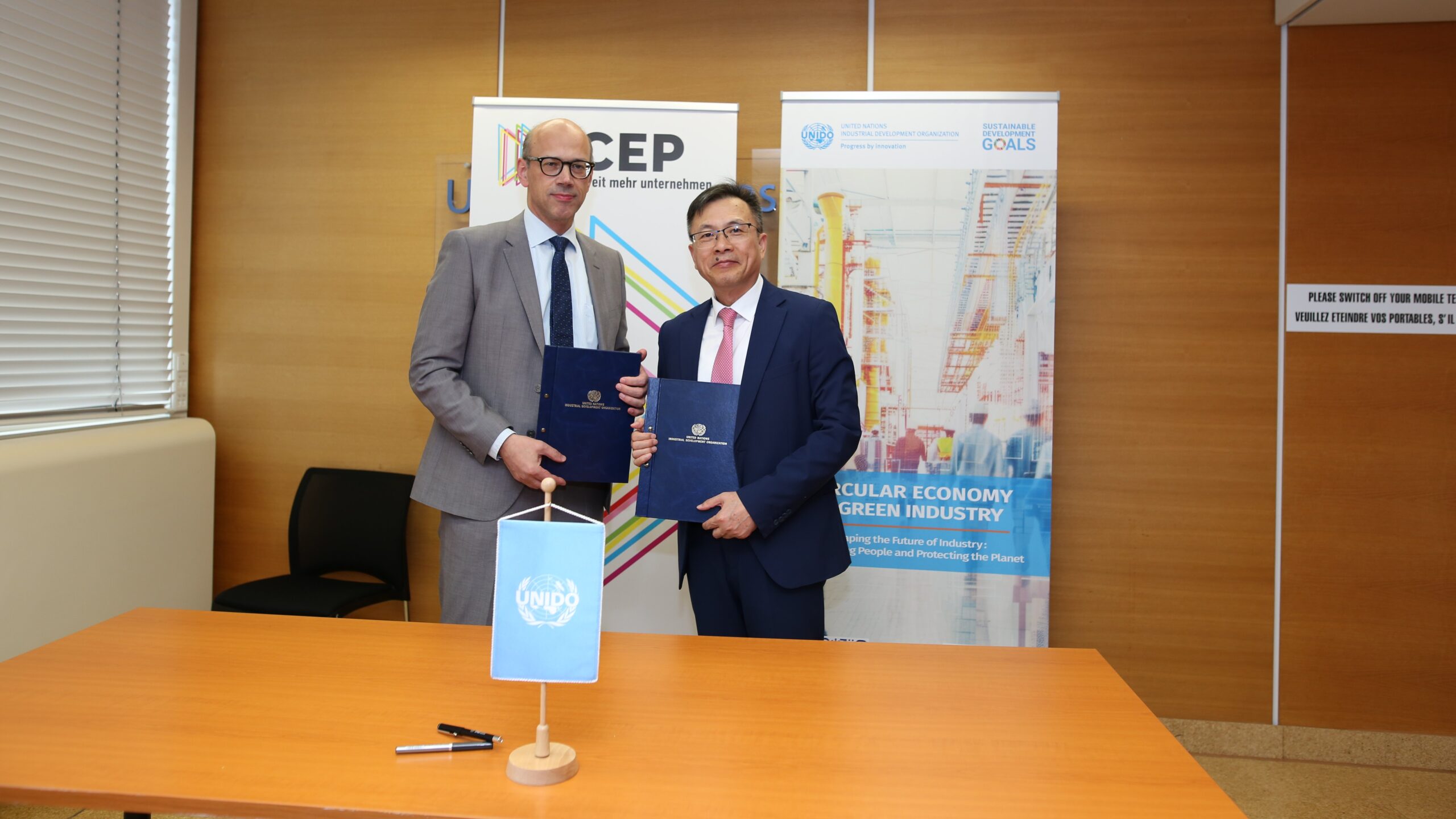
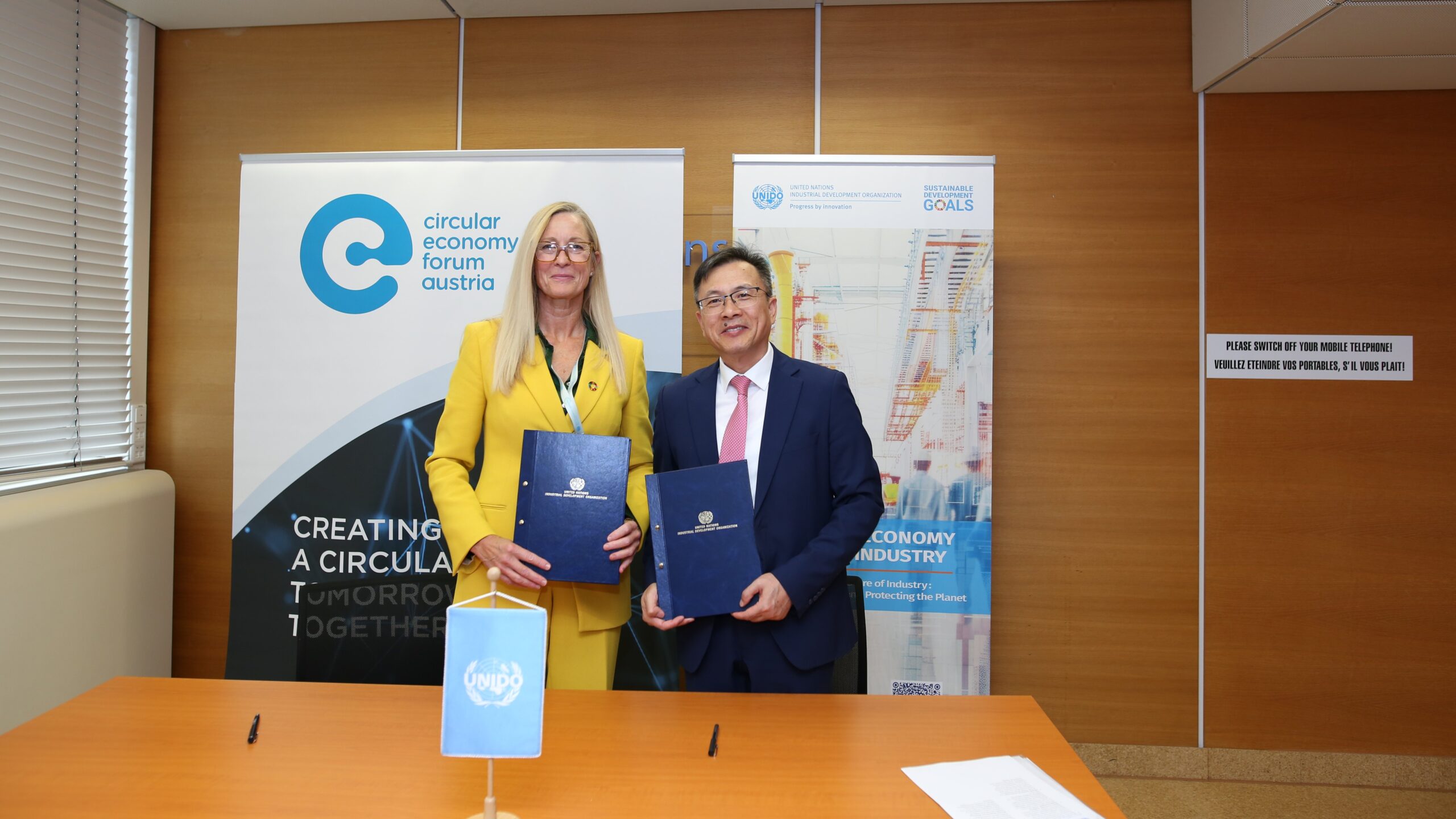
The Week also yielded new agreements to strengthen international cooperation. UNIDO Director General Gerd Müller and GEM Founder and Chairman Xu Kaihua signed a Joint Declaration on battery circularity, sustainable critical mineral value chains and resource recovery. Ciyong Zou, Managing Director of UNIDO’s Directorate of Technical Cooperation and Sustainable Industrial Development, signed Joint Declarations with CEFA and ICEP on industrial innovation, business partnerships and capacity-building. A UNIDO-Yale University Memorandum of Understanding, pre-signed by Yale, was also presented to Ciyong Zou for signature during a bilateral meeting with Yale’s Vice Provost for International Affairs.
From dialogue to delivery: The way forward
In their closing remarks, Ciyong Zou and Smail Alhilali, Director of UNIDO’s Division of Circular Economy and Green Industry, identified four priorities for the next phase: translating the mandate into country-driven action; accelerating the adoption and scale-up of circular industrial solutions; mobilizing finance and partnerships; and delivering measurable, inclusive economic, environmental and social benefits.
Ciyong Zou stressed the importance of collective ambition: “Circularity provides an opportunity to advance multiple global objectives simultaneously: industrial development, climate action, biodiversity protection, pollution reduction, economic resilience and job creation.” Smail Alhilali highlighted the implementation challenge ahead: “The challenge is no longer simply to demonstrate why circularity matters, but to create the conditions to implement, finance and scale circular solutions across industrial value chains.”
Alhilali thanked Austria as host country; Armenia, Mexico and the Philippines for their leadership on the resolution; Ghana and other supporting Member States; Permanent Missions; the Global Environment Facility, the European Union and other development partners; participating UN organizations and international networks; and the industry leaders, financial institutions, researchers and experts who contributed to the Week. He also acknowledged the dedication of colleagues across UNIDO who helped make the event possible.
Building on decades of UNIDO technical cooperation, the Week drew on the Organization’s capacity to connect industrial policy, enterprise-level solutions, scientific expertise and international partnerships, providing a global platform for dialogue, knowledge exchange and collaboration. The outcomes will help shape UNIDO’s forthcoming Circular Economy Technical Framework and Plan of Action, alongside Member State consultations and practical experience. The next phase will focus on translating this momentum into country-driven cooperation, scalable industrial solutions and measurable results, in line with national priorities.
About Circular Economy & Green Industry Week 2026
Organized by UNIDO from 2 to 4 November 2026 in Vienna under the theme “Shaping the Future of Industry: Circular, Cleaner, Competitive,” Circular Economy & Green Industry Week 2026 brought together more than 300 participants from governments, industry, international organizations and financial institutions to advance circular industrial solutions, strengthen partnerships and support the implementation of policy commitments.
Learn more: Official event webpage